A YOUNG MALE WALKS INTO YOUR PHARMACY AND REQUESTS AMOXICILLIN WITHOUT A PRESCRIPTION FOR HIS HEADACHE. He mentions that a single dose would take the headache away, and it always works perfectly. IF YOU WERE THE PHARMACIST ON DUTY, WHAT WOULD YOU HAVE DONE.
A systematic review conducted in 2019 estimated 4.95 million deaths associated with bacterial AMR. They also mentioned the six leading pathogens associated with AMR-related deaths, including Escherichia coli, Staphylococcus aureus, Listeria monocytogenes, Streptococcus pneumoniae, Acinetobacter baumannii, and Pseudomonas aeruginosa. ( https://linkinghub.elsevier.com/retrieve/pii/S0140-6736(21)02724-0 ). What is AMR, and what happens when antibiotics stop working?.
IF THIS SOUNDS FAMILIAR, READ AHEAD TO EXPLORE MORE ABOUT ANTIMICROBIAL RESISTANCE.
WHAT IS AMR?
Antimicrobial resistance (AMR) occurs when antibiotics, antifungals, antiparasitics, and antivirals prescribed by a general practitioner for specific indications do not have any effect or do not work. Thus, this makes it harder to treat even the most minor bacterial infections, or even impossible to cure. Since the first line of antibiotics does not work, doctors might decide to use a broader spectrum of antibiotics, such as ‘Cephalosporins.’ These antibiotics not only come with more side effects but also increased costs and a burden to the patient as well as the healthcare system.
HAVE YOU EVER WONDERED WHY YOUR ANTIBIOTICS DO NOT WORK AND WHO IS RESPONSIBLE FOR ALL THE GROWING RESISTANCE PATTERNS?
WHY ANTIBIOTICS STOP WORKING?
Let us talk about the first statement in this article, ‘non-prescription selling of antibiotics’.Individuals assume that antibiotics help treat their headaches; however, antibiotics were never indicated for minor ailments such as headaches. What they feel is making them better is just a placebo effect, meaning it is the mindset that “antibiotics treat headaches and pain.” Every individual must have been prescribed some antibiotics in their life by a doctor; therefore, you must have noticed how doctors and pharmacists explain the specific times to take the medication, and they also mention, “Ensure to complete the full course of your antibiotic therapy”.
HAVE YOU EVER WONDERED WHY YOUR PHARMACISTS COUNSELS YOU ABOUT IT AND WHY YOUR MEDICATION CONTAINS THE “COMPLETE FULL COURSE”?
Yes!! That’s correct, it is to prevent antimicrobiam resistance (AMR) and ensure complete cure of the bacterial infection. So when these medications are sold over-the-counter in pharmacies and shared between family members or friends in the community, without any proper bacterial culture being done prior, AREN’T WE PROMOTING AMR? When antibiotics are not taken for their specified indications, and when the medication course is not completed, this makes the bacteria resistant to the antibiotics, thus they do not work when they are actually required. Additionally, when patients overuse antibiotics, for instance, by getting a prescription written or purchasing them over-the-counter for minor cold and flu infections, which are viral in nature, antibiotics would not provide any relief; yet, patients still insist on buying them. In simple terms, the bacteria develop mechanisms to fight the antibiotics from killing them.
Furthermore, non-prescription use of antimicrobials not only affects one individual but the entire globe. To elaborate further, when the bacteria develop resistance to antimicrobials, they carry this with them like genes, and when a patient actually requires a particular antimicrobial for a specific indication, it does not work.
WHY DOES AMR MATTER?
As mentioned earlier, the estimated rising global deaths of 4.95 million are associated with AMR, and if the resistance continues to increase, the global death toll will also rise, affecting human populations, growth, and economy. In addition, because first-line therapy didn’t cure the patient, it would lead to a longer hospital stay, thus increasing the requirements of hospital beds, increasing workload, and increasing hospital bills. Moreover, with escalating resistance to antimicrobials, broader-spectrum medications will be required, which are very costly, and not every individual would be able to afford them.
HAVE YOU EVER HEARD ABOUT MRSA, DRUG-RESISTANT IN TB, HIV, OR MALARIA?
These are a few deadly diseases with very limited and costly treatment options.HIV drug resistance (HIVDR) develops due to changes in the HIV genome, thus affecting the ability of antiretrovirals to block viral replication. It is transmitted when patients do not adhere to their antiretroviral treatment and can also be transmitted at the time of infection. It is important to discuss this here because if this drug resistance pattern is not controlled and awareness is not raised about it, the amount of HIV infection will increase in the future, leading to more HIV related mortality and morbidity. As recommended by the WHO, countries should routinely do HIVDR surveys to ensure optimal selection of antiretroviral drugs in preventing and treating HIV (https://www.who.int/news-room/fact-sheets/detail/antimicrobial-resistance).
Moreover, isoniazid and rifampicin, which are the two most effective first-line drugs in Tuberculosis treatment, have developed resistance, leading to multidrug resistance TB (MDR-TB). Fortunately, second-line drug therapy is available to cure MDR-TB; however, it is expensive and toxic and may lead to more drug resistance.
WHAT CAN WE DO?
As members of the community, it is our responsibility to take action in preventing the spread of extensive antimicrobial resistance. This includes :
- Use of simple analgesics for minor cold and flu infections rather than antibiotics
- Vaccinate yourself and your family members
- Ensure good hygiene
- Avoid unnecessary antibiotics unless prescribed
- Complete the antibiotic course when prescribed by the doctor
- Avoid sharing your antibiotics
- Antimicrobial stewardship
WHAT IS ANTIMICROBIAL STEWARDSHIP (AMS)
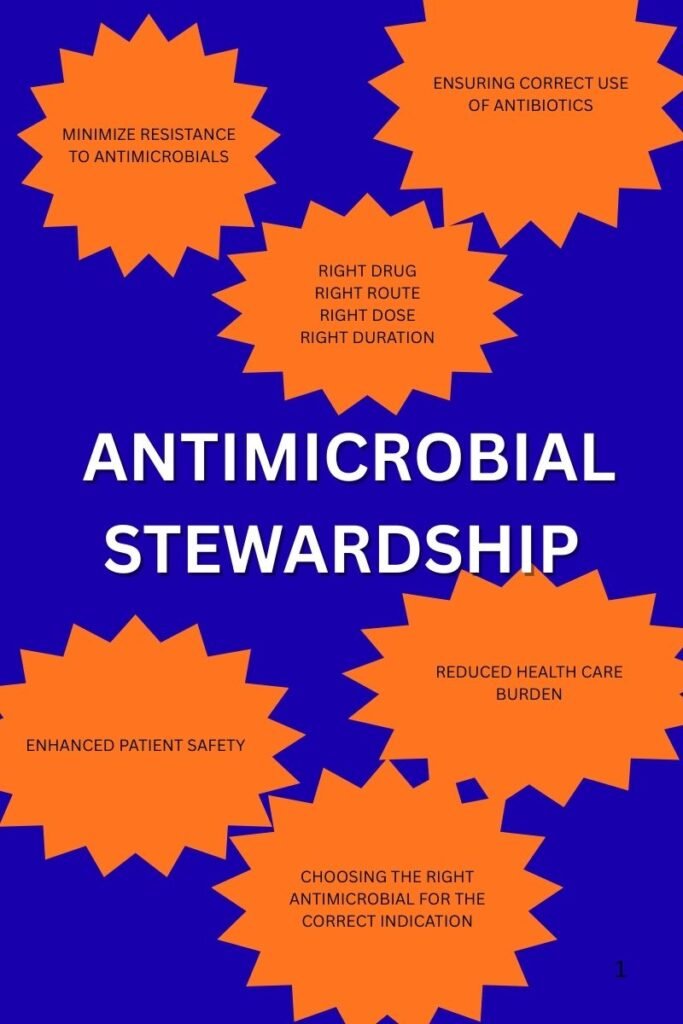
(For further infomartion on AMS – https://www.ncbi.nlm.nih.gov/books/NBK572068/ )
AMR may not seem to be a big thing but it actually affects the globe extensivley therefore as responsible citizens lets work together in raising awareness about antimicrobial resistance and protects ourselves and others from untreatable or highly costly infections .By working together , we not only prevent infections but also protect our antimicrobials.
Lets share this blog so we reach more people across the globe and raise awareness as much as we can.